Tuesday, October 30, 2007

What Every Soldier Should Know


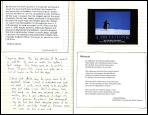
For various reasons both obvious and subtle, warriors and poets are often at odds. Here's a poem written by a soldier, Brian Turner, which made it into Best American Poems 2007. You can here him read it out loud, with a brief intro, here.

What Every Soldier Should Know

To yield to force is an act of necessity, not of will; it is at best an act of prudence.
—Jean-Jacques Rousseau

If you hear gunfire on a Thursday afternoon,
it could be a wedding, or it could be for you.

Always enter a home with your right foot;
the left is for cemeteries and unclean places.

O-guf! Tera armeek is rarely useful.
It means Stop or I’ll shoot.

Sabah el khair is effective.
It means Good Morning.

Inshallah means Allah be willing.
Listen well when it is spoken.

You will hear the RPG coming for you.
Not so the roadside bomb.

There are bombs under the overpasses,
in trashpiles, in bricks, in cars.

There are shopping carts with clothes soaked
in foogas, a sticky gel of homemade napalm.

Parachute bombs and artillery shells
sewn into the carcasses of dead farm animals.

A graffiti sprayed onto the overpasses:
I will kill you, American.

Men wearing vests rigged with explosives
walk up, raise their arms, and say Inshallah.

There are men who earn eighty dollars
to attack you, five thousand to kill.

Small children who will play with you,
old men with their talk, women who offer chai—

and any one of them
may dance over your body tomorrow.

Monday, October 29, 2007

The Next New Thing


So here we are. It's Monday night, but it sort of counts as a Sunday because this was a three-day weekend. (School holiday, long story.) The first marking period just ended there were two primary orders of business over the last few days: first to get the college recs out to the students applying for early admissions, and second to get the papers corrected and the grades done; they have to be entered on the school computer system by Wednesday. Other than that, it's been almost...calm, for a change. Which gives me a little time to think about the Next New Thing, which at this point looks like Moodle.

Moodle has been around for a while, and when I checked it out a year ago my socks were definitely not rolling up and down, but now my school's tech department has signed us up and we have our own-in-house version taking shape with the usual assortment of early adopters knocking themselves out. What I like so far is that in its present incarnation it has some neat features that are more or less immediately usable, and then lots of other bells and whistles that it's going to take me a year and a half to figure out, by which time it will probably have been made obsolescent by the Next New Thing. But, for the record, here's what I'm playing with so far:


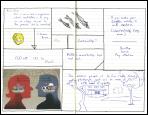
Moodle is set up sort of like a blog page. The left sidebar is for maintenance functions, and the right for whatever you decide to put there: calendar, archive, headers for recent posts, etc. and I've created forums for our class to extend their discussion about what we're reading (The Poisonwood Bible, at the moment). Students can rate one another's posts based on whatever criteria you as the teacher decide to foreground; you can, for example, provide meta-tags and ask the students to label entries which meet certain conditions (cites text; raises a question; explores alternative answers, etc.)


There's also a cool feature that allows you (and/or the students) to create a glossary/lexicon. When we do literature circles, I'm asking the lexicographers to select five of their most significant words and add them to the lexicon. The words can be categorized and tagged with keywords (like the kikongo word below). You can also sort and track entries by date, category, and author (useful for checking to see who has completed the homework).


These words then form a database from which you can display a "Word of the Day" (the Vocabulary spotlight in the lower right in the first picture above). There's also a quiz-generating function which I haven't played with yet, and a whole grading module which basically allows you to use the Moodle site as your complete course-management system. I'm not there yet, and don't know if that's where I'm heading. With grading, as with poetry, I'm still more at home with the ambience and soft-edged indeterminacy of pencil on paper.

I've begun creating forums for other class activities. For example, our writer-in-residence Chang-rae Lee visited our class last week, and so I created a forum (number 4 above) and asked each of the students to report on something they thought was interesting or memorable. I've also figured out how to set up widgets in the sidebar, like the flickr badge in the upper right of the first picture, using regular html coding.

There's a group of teachers from the junior school and the academy (high school) who now meet once a week to share what they're up to with Moodle and help each other troubleshoot. One of the supposed advantages of Moodle is that because it's open source eventually you can get access to other modules and programming innovations from people all over the world. All you need to be able to do that is... time. Right now, I've got a foot in the door, and I'm playing around small kid kind in my own little sandbox. My vision is constrained by the realities of everyday teaching. But so far this has been a pretty easy first few steps, and I'm hoping that I'll find more and better functions on the way.

Sunday, October 21, 2007

Spaceman Blues


Brian Francis Slattery's Spaceman Blues. is, well, an experience. It has to do with events immediately leading up to and including an alien takeover of New York City. It's not a book with much in the way of redeeming social value, and I can't say that it addresses anything in the way of deep philosophical issues, but if it's a ride you're looking for, Bucko, have I got a ride for you. Slattery is an impresario of the imagination, or, as James Taylor might have it, a churning urn of burning funk. Here, for example, is a passage from chapter one. A character of some notoriety, one Manuel Rodrigo de Guzman Gonzalez, has disappeared, and his living quarters have exploded, and the word is getting out:
The news spreads in a widening circle of shock, people are talking about it up and down the street, voices crackle across the air and over wires. He's gone, he's gone, it goes in letters, in words flashing across flickering screens, it is written by planes in the sky. It spreads from the city and moves to the end of Long Island, into New Jersey, Connecticut, upstate, across New England; it moves across the continent over the miles of thrashing grain, the ragged heights of the Rockies, down into the deserts and dense forests and to the opposite shore, where men hear it on shortwave radios at the place where the Mexican border falls into the Pacific Ocean, and the waves roll in gigantic and break against the rocks and sand with a force that ensures compliance. It passes along the piers of Eastern Europe, syllables slipped between knife points and rusting rifles; on the shores of Angola they wail at the ocean, beat their feet into the sand, turn back toward crumbling cities. The news burns bodies in the Bronx, things are cast adrift in the deep water of the East River, people depart into the sky, there are meetings in drainage systems, encoded signals broadcast in the flight patterns of birds, machines stir, motors grind into action at frequencies only subterranean people can feel. And people begin to congregate in the places that Manuel loved. They want to know what happened, they want to understand, but being the kind of people they are, all that wanting turns into partying. In Astoria, Egypt Cafe is jammed to the ceiling, people walk over other people to get inside, they spill out onto the street in front of the laundromat, they raid the delis and liquor stores and close down Steinway, they make a party so big that the police see it and just throw up their hands, set up roadblocks, join in when they get off duty. At the Maritime Lounge in Red Hook, some Congolese soukous band appears out of nowhere and plays for two days straight, they have to coat their fingers with glue in between numbers to keep the skin on, and the crowd crashes in and chokes on seven different kinds of smoke and laughter, they pour beer and whiskey all over each other and dance to break floorboards. The place runs out of alcohol after eighteen hours but people keep bringing in more, they toast Manuel again and again, wish to God you were still here. They end up in the water of the harbor, holding their drinks high and setting them on fire until the end of the second day rolls by and they go to sleep in the street, they crawl home in a blind drag. They pass out in subway cars, they wake up feeling like their brains are cut in half. They go home in pairs and wake up naked with each other, their furniture upended, dishes broken, sheets ripped into long shreds, clothes plastered somehow to the ceiling. (8-9)
The passage gives some sense of the hyperbolic intensity, the syntactical exuberance, the sheer delight in the rhetoric of enumeration that carries the narrative all the way through the book. I've been re-reading On the Road recently as well, and often found myself thinking of Kerouac, and of Whitman, as I read Spaceman Blues. Slattery's prose is jazzy, lyrical, bursting at the seams. Later in chapter one, for example, a party jumps into third gear with the arrival of the band, whose name and methodology are apt analogues for Slattery's preferred method of composition:

The Pan-Galactic Groove Squad crashes through the window at eleven-thirty to claps and cheers and stomping feet; there are twenty-seven of them in this band, they have guitars and basses, keyboards, accordions, horns, banjos, and drums, so many drums, and they set up in no time and begin to play, a beat that starts down low and simple, just the kick and some hi-hat with one bass snaking around it. The rest of the band waits, they're letting the groove get in the pocket, hit bottom. It does; and now two drummers join in, they weave a polyrhythm that brings in one guitar and some pops from a banjo, oh this groove is young but it's growing, and people are starting to move. Now a singer steps up to the mike, puts out some blues that two more singers turn to gospel, harmonies deep and wide that make you want to believe. Five more drummers slip their way into the spaces, two guitars, another bass, a single trumpet line, simple and urgent, and those singers are swelling up, they're filling the groove to bursting, and just when nobody can take another second, they break it open in an explosion of horns and keyboards and shouting strings. The people open up their throats and sing, and everybody screams and throws their hands in the air, they're falling in and stomping it down, sweating and throwing back their heads until they are bound together, band and dancers, into a single thing, and this is a party not even the Hand of the Righteous could stop, it is loud and large and full of joy; and then Wendell steps into the room. (25)
Wendell is Wendell Apogee, the book's main character, who, it turns out, is not only the lover of Manuel Rodrigo de Guzman Gonzalez—the book is in large part a quest story, as Wendell seeks to find out where Manual has disappeared to—but also one of the particular targets of the space invaders. His life is all too frequently interrupted by moments like this:

From Wendell’s window come flashes of green and purple light, scuttles and shrieks. Then a howl that sets the dogs barking for blocks, cats fighting and mating in the alleys to ripping each other to pieces. A glow grows, phasing from blue to orange, and with a scream that breaks glass, the window frames shatter outward and four shapes in purple raincoats fly out, mounted on tiny hovering scooters that emanate a fine red mist. They wheel around each other and then shoot off down the canyon of air between the buildings to lift off into the sky; seconds later, an explosion fires from the ruined wall, the flames leap across the street and warp the glass of the apartments on the other side. Wendell’s apartment is then a smoking hole, gaped at by neighbors, the tatters of his possessions snowing into the street: the limbs of furniture, cushion fluff, and books, hundreds of books burning and flopping to the ground, trailing fire and ash. (63)
You have probably noticed there seem to be a lot of explosions in this narrative. Slattery's story thrives on mayhem, and the tonality is that of apocalyptic glee.

There is one more sequence which I cannot resist citing: a description of the mechanics of Darktown, a whole and wholely imagined city underneath the streets and sewers of the Big Apple. It's an audacious act of the imagination carried off with Slattery's characteristic offhanded wizardry:

Catwalks and narrow metal stairs sway and tangle, metal shacks and globular houses hang suspended in the air, floating bars and restaurants throw out heat and steam, thousands of people climb with bundles on their backs and lights lashed to their heads, shouts and whistles fly across the space, animals scramble amok, babies scream, a riot of music threatens to resolve into a deep, smoky rhythm that shudders and moans. High above, the exposed pipes of the city heating system lance along the cavern ceiling, spouting steam. The belly of a subway tunnel shifts as the train rattles by, looses a film of dust that falls through all this, settling on the heads of the multitude, sprinkling through the latticework to rest, at last, on the water below that teems with boats, people rowing, trundling away with grunting engines. They’re selling things from Bangladesh and Brazil, they the teeth of a hundred beasts not yet named, they have rice cookers and machine guns, blowtorches and flares. It smells of fish, oil, and burnt electrical wire, a scent that trails through the people and the light and sounds, to the arms of the city they can only see as a group of yellow lights, like the shine of dull suns in constellation, dim but carrying for miles. (81)

If the genius is in the details, then I guess Slattery is some kind of genius. His sentences are concatenations of details in compelling configurations: rice cookers and machine guns, blowtorches and flares. I often found myself laughing out loud, not so much at what was being said, but at the zest and spirit with which it was being delivered. Check it out.

Information R/Evolution


This video from Michael Wesch is making the rounds. I saw it at Multiliteracies. I'll do my bit to spread it:

Sunday, October 14, 2007

Evenfall


In my sophomore class we've been using literature circles as a means of responding to The Poisonwood Bible. In the debrief of our first literature cirlce discussion, the students made note of three recurring motifs, "light" and "garden" and "heaven," the last of which we connected to the motif of "home" from their reading during freshman year of The Odyssey. As I followup I asked to find and place in their commonplace books a picture that illustrated at least one of these concepts in a way that interested them.

On Friday after school I was in the Writing Center for a small reception we were having for Fern Davye, a woman who travels all around the country doing dramatic interpretations of poetry. She had just spent three days visiting classes at Punahou, and during this last hour or two she was spending with a small group of teachers. We were talking, and then she presented some poems to us. She likes to turn the lights down when she presents, so it was darkish in the writing center.

A little after 5:00, just as the afternoon was coming to a close and evening was starting to descend, I happened to look away from the presenter and over to the side, toward the window beyond the teacher's desk. What I saw was a poetry presentation of a different kind: a silent poem made up entirely of light and shadow. It struck me as I was looking at it that it seemed to connect in subtle ways to all three themes we had talked about in class: light and garden and home. I had my camera with me, so I took the picture:


Saturday, October 6, 2007

At Large and at Small


I recently finished reading Anne Fadiman's delightful and good-humored collection of "familiar essays" entitled At Large and At Small. In her introduction to the volume she references a "dispirited writer" (her father, Clifton Fadiman) who mourned the imminent death of a genre that was "setting to the horizon, along with its whole constellation: formal manners, apt quotation, Greek and Latin, clear speech, conversation, the gentleman's library, the gentleman's income, the gentleman."

I suppose that it should come as no surprise that I am a fan, as I suppose any self-respecting blogger must be, of the "familiar essay." What are blogs if not essais, attempts, explorations of thought through words? It has often occurred to me as a teacher that in our schools we actually do the genre a disservice by impressing upon generations of students that an essay is, and must be, a thesis-based argument analyzing a text or a series of historical events. It's true that there are such essays, but if that's the only kind of essay we ask students to write, we are confirming their misunderstanding of the genre and denying them access to its considerable pleasures.

For, make no mistake about it, this is a fun book to read, and one gets the clear impression that for Anne Fadiman it was a fun book to write. She has essays on, among other things, ice cream, mail, on the flag ("A Piece of Cotton"), moving from the city to the country, coffee, and Arctic exploration. Fadiman has a broad-ranging mind, a world of memories, a fluid and engaging writing style, and a sense of humor.

I came away from the book with a renewed appreciation for the pleasure to be taken in the making and reading of lists. The first essay in the book is called "Collecting Nature," and it is a recollection of the time she spent as a child with her brother collecting butterflies and other objects from nature. Early in the essay she makes reference to Dickens which includes the sort of list I have in mind:
In Our Mutual Friend, Silas Wegg visits a shop belonging to "Mr. Venus, Preserver of Animals and Birds, Articulator of human bones." Mr. Wegg is there because—could anyone but Dickens ever come up with this one?—he wishes to retrieve his leg, which Mr. Venus purchased, for potential inclusion in a skeleton, from the hospital in which it was amputated. "I shouldn't like," Says Mr. Wgg. "to be what I may call dispersed, a part of me here, a part of me there, but should wish to collect myself as a genteel person." (Mr. Wegg may thus be the only collector who has ever collected himself. He does get his leg back, though not until later in the book; it arrives under Mr. Venus's arm, carefully wrapped, looking like "a sort of brown paper truncheon.") Mr. Venus shows Mr. Wegg around the shop. "Bones, warious," he explains.
Skulls, warious. Preserved Indian baby. African ditto. Bottled preparations, warious. Everything within reach of your hand, in good preservation. The mouldy ones a-top. What's in those hampers again, I don't quite remember. Say, human warious. Cats. Articulated English baby. Dogs. Ducks. Glass eyes, warious. Mummied bird. Dried cuticle, warious. Oh, dear me! That's the general panoramic view. (17)
Later, in her essay "Ice Cream," she reports that in her researches that

In 1778, a Benedictine monk in Apulia published recipes for ices and ice creams flavored with coffee, chocolate, cinnamon, candied eggs, chestnuts, pistachios, almonds, fennel seeds, violets, jasmine, oranges, lemons, strawberries, peaches, pears, apricots, bitter cherries, melons, watermelons, pomegranates, and muscatel grapes. (50)
There's something about a list of that sort that just makes me laugh. At one level theres just the delight to be taken in the sequence of syllables, the work of the mouth in shaping the words; it's alphabetically musical. Then there's the movie behind the list: the monk laboring away in the monastery kitchen experimenting with every conceivable flavor, laboring far into the night with tasting spoon in hand, doing his particular version of God's work, trying to get the proportions just right. One wonders about the flavors that didn't make the final list.

Later, in her essay "Mail," we find this short history of epistolary innovation in a one-sentence list:

The Penny Post, wrote Harriet Martineau, "will do more for the circulation of ideas, for the fostering of domestic affections, for the humanizing of the mass generally, than any other single measure that our national wit can devise." It was incontrovertible proof, in an age that embraced progress on all fronts...that the British were the most civilized people on earth. Ancient Syrian runners, Chinese carrier pigeons, Persian post writers, Egyptian papyrus bearers, Greek hemerodromes, Hebrew dromedary riders, Roman equestrian relays, medieval monk-messengers, Catalan troters, international couriers of the House of Thurn and Taxis, American mail wagons—what could all of these have been leading up to, like an ever-ascending staircase, but the Victorian postal system? (117)
September 11 brought the flag back into American consciousness in a powerful way; suddenly flags were everywhere, and Fadiman found herself thinking about, and making a tentative inventory of, its multiple significances:

In the weeks after September 11, I saw for the first time that the flag—along with all its red, white, and blue collateral relations—is what a semiotician would call “polysemous”: it has multiple meanings. The flag held aloft by the pair of disheveled hitchhikers who squatted next to their backpacks on Route 116, a mile from home, meant We will not rape or murder you. The red, white, and blue turban worn by the Sikh umbrella vendor a friend walked past in Dupont Circle, not far from the White House, meant Looking like someone and thinking like him are not the same thing. The flag on the lapel of a Massachusetts attorney mentioned in our local paper—on seeing it, his opposing counsel had whispered to a colleague, “I’m so screwed, do you have a flag pin I can borrow?”—meant I am morally superior. The flags brandished by two cowboyhatted singers at a country fair we attended on the day the first bombs fell on Afghanistan meant Let’s kill the bastards. The Old Glory bandana around the neck of the well-groomed golden retriever I saw on a trip to Manhattan meant Even if I have a Prada bag and my dog has a pedigree, I’m still a New Yorker and I have lost something. The flag in our front yard meant We are sad. And we’re sorry we’ve never done this before. (148)
Later in the same essay, she quotes from an early twentieth-century tract in which the author has worked himself up into a loosely alphabetical frenzy of indignation:

In 1905, an anti-desecration circular lamented the use of the flag in advertisements for "bicycles, bock beer, whiskey, fine cambric, bone knoll, sour mash, tar soap, Amercian pepsin chewing gum, theatres, tobacco, Japan tea, awnings, breweries, cigars, charity balls, cuff buttons, dime museums, floor mats, fireworks, furriers, living pictures, picnic grounds, patent medicines, poolrooms, prize fights, restaurants, roof gardens, real estate agencies, sample rooms, shoe stores, soap makers, saloons, shooting galleries, tent makers, variety shows, [and] vendors of lemon acid." (154)

There is a satisfaction—even if it is only the satisfaction of having adequately enumerated the sources of one's indignation—to be taken in the creation of such lists, as in the reading of them. There is, I would argue, a larger satisfaction to be taken in having written well about what one has experienced and cares about. Sometimes, when the moon is in the seventh house and Jupiter aligns with Mars, one gets to write something that takes on a life of its own, that opens up and surprises you. I remember seeing an interview with Jamaica Kincaid who was talking about her much-anthologized short piece called "Girl." It was the first piece she ever had published, and she said that when she finished writing it, she was taken off guard, surprised, stunned. And she said to herself, as she re-read what she had written, "This is really... something." She didn't have a word for it, but she knew it was different, it was new, it was good, it was a kind of gift.

I asked my sophomore students last week how many of them had had that experience as a writer somewhere in their first ten years of schooling. One girl held her hand over the desk, palm down, and wiggled her fingers tentatively: maybe, sort of. Everyone else was looking at the floor.

Tuesday, October 2, 2007

Discipline and Values


This passage appeared as a column by John Rosemond in today's Honolulu Advertiser. Tough to find anything to argue with here.

I've said it before, but it cannot be said often enough: The discipline of a child is not accomplished by manipulating reward and punishment. Yes, a child needs to understand that behavior results in consequences, but that understanding alone is not sufficient to grow a well-behaved, well-mannered child.

Besides, whereas proper consequences will virtually guarantee proper behavior in a dog, proper consequences do not guarantee proper behavior in a child (or human of any other age). If they did, no criminal would spend more than one, maybe two, stints in jail.

Discipline is the process by which parents transform a child into a disciple, a little person who will look up to them, follow their lead, and subscribe to their values. This is accomplished through proper leadership, not through the manipulation of consequences. The principles that define proper leadership do not change from one leadership context to another. Therefore, if one understands leadership in, say, a business environment, then one understands how to lead children.

The most important of all leadership qualities is decisiveness. All effective leaders act like they know what they are doing. They act like they believe sincerely in the rightness of their decisions. In parenting, this translates to standing behind one's instructions to a child, enforcing rules dispassionately, and proving that "no" means nothing other than "no."

I have taken to challenging parents in my most recent audiences to assess their leadership using this simple standard. "Raise your hand," I ask, "if your children know, without a shadow of doubt, that when you give an instruction, you are going to make sure it is carried out, that when you state a rule, you are going to enforce it, and that when you say 'no,' you mean nothing less than 'no.' " In a recent audience of some 200 parents, only five responded affirmatively.

I then ask, "Now raise your hand if as a child you knew, beyond a shadow of doubt!, that your parents were going to enforce their instructions and rules and that when they said 'no,' they meant 'no,' period." In that same audience, I estimated that 150 hands were in the air. The relative proportion has been approximately the same in 50 other audiences, bigger and smaller, across America.

This exercise tells why today's children come to school considerably less disciplined than children of even 20 years ago (I've never heard an experienced teacher testify to the contrary). This tells why today's parents are having so many more problems in the area of discipline than did their parents, and certainly their grandparents. It is not because they are not manipulating consequences as skillfully; rather, it is because they are not demonstrating to their children that when they speak, they mean exactly what they say.

Yesteryear's parents were apt to simply tell their children to pick up their toys. Today's parents are apt to ask their children if they will please pick up their toys, "OK?" Today's parents, in the face of their children's emotional dramatics, are likely to demonstrate to their children that sufficient displays of emotional dramatics on their parts will result in "no" changing to "oh, all right!"

The du-jour explanation for a child who will not take no for an answer, who tests every instruction and every rule with the full might of his or her free will, is that an inherited chemical imbalance causes knee-jerk resistance to authority. Concrete verification of this proposition is lacking, but as recent audiences of mine have demonstrated, proof abounds that many if not most of today's parents are suffering from leadership deficiency disorder.

Tuesday, September 25, 2007

Juxtapositions #37


So here's a strange moment. I'm currently enrolled in an informal seminar course called Plato's Republic. There's a teacher at our school who has taught the course for many years, and each year he offers a special section for interested adults—parents and teachers mostly. He'll be retiring at the end of the year, and I wanted to get a chance to take the course and go back into Plato, whom I had not read since college. We're meeting in a traditional classroom around a traditional table reading a physical book written something like 2400 years ago (I just doublechecked the date, not through Google, which might have been easier, but, for old times' sake, in my twice-rebound copy of Benet's Reader's Encyclopedia, which I bought in 1965 and have been using ever since—most often, I must confess, to find answers for crossword puzzles), and we're having actual honest-to-God real-life three-dimensional conversations about timeless issues like the nature of justice.

So this evening I place my Plato on the table, turn to my computer, and here in my Google Reader inbox I find a post from Ken Ronkowitz which features this video, the introductory lecture from a Alexandra Juhasz, a college professor who is teaching an online course about YouTube, on Youtube:


I'm not sure what all of this means. I think that Alexandra Juhasz is embarking on a very interesting educational odyssey, the results of which is going to be much less predictable and impact a whole lot more people than our quiet little seminar over The Republic. Interesting times.

Friday, September 21, 2007

Phase One


The school year has its rhythms, and one of the punctuation marks at our school is parents' night. About a month into the school year, just before the first quarter progress reports come out, our school runs a program where parents come in for two and a half hours and go through an abbreviated version of their child's schedule, moving from class to class for ten-minute introductory sessions in which each teacher gives a brief overview of the course.

It always surprises me how fast the first month goes by and how soon parents' night arrives. I've come over the years to enjoy the experience. I like meeting with the parents, however briefly, and getting a chance to try to put the daily events of the semester in a broader context. With my second-semester sophomores, for example—the ones who took the first half of the course in summer school—I think of the trajectory of the semester as a three-part arc. The first month or so consists of a series of shorter readings and exercises designed both to introduce the students to some of the essential questions and process skills that they will be engaged with for the rest of the semester, and to acclimate the students to one another and to the culture of the classroom. I don't do things exactly the way that other teachers do them, and it takes a while for students to get a read on me and vice versa. One of the reasons that first month seems to go by so fast is that there are so many different sets of adjustments that we are making to one another.

Over the last few days, the class feels to me like its starting to come together. Today, the day after parent's night, there was something in the air that hadn't been there before. The students seem to be a little more focussed and a little less guarded. The class is starting to become a community; it feels like more students are looking around and saying "This is going to be okay." And I'm feeling that too.

The middle part of the arc for the sophomores covers the four or five weeks in which we will be reading together The Poisonwood Bible, which is still one of my favorite books and pretty much ideally suited for a course which a primary strategic focus has to do with learning how to shift your point of view, and why it might be important to be able to do that. It's a book which presents an extraordinary richness of opportunity for the aspiring critical thinker. There's food for thought for a reader coming from almost any direction: identity stuff, psychology stuff, political and philosophical and cultural stuff. There's extraordinarily vivid language and a strong narrative line and characters you can learn to love—or hate. And underlying it all there are the questions of how we learn to deal with one another, and how we define ourselves by the choices we make. It's a book you can sink your teeth into, and a book which gets better upon re-reading. Having The Poisonwood Bible in the center of the arc provides a substantive common reading experience that gives a students a chance to test and hone their emerging analytical skills.

During descending arc, which occupies about the last six weeks of the course, students work individually or in groups on projects which a) link to the essential questions they had earlier been asked to identify and reflect upon and b) demonstrate the kind kinds of quality they think they are most capable of achieving.

It's hard for the students to see the logic of the semester at the beginning. Everything they're being asked to do is just a little bit different than what they're used to, and they don't know yet how one thing leads to another, how the work they are doing on their directed assignments or in their commonplace books or on their cycle papers will be useful to them as they move forward. But they're starting to accumulate enough material now, enough work done, that we can start making those connections.

The segment of the arc is just about complete. Now we start reaching higher.

Wednesday, September 19, 2007

Lowering the Bar


It's been ten days since I've posted anything. I could make lots of excuses, if excuses were called for. The start of this school year, while interesting, while challenging, while incredibly rich and various, has not been easy.

Once upon a time I thought that if I stayed at something long enough, it would eventually get easier. That has turned out to be true in some cases. I can, for example, after three years of practice, now play a C major scale on the piano with both hands without screwing it up too badly. I can throw together a salad in five minutes before dinner, without injuring myself, whereas once it was even money if I could get it done without breaking into the Band-Aid box.

But this is my 38th year of teaching, and I've gotta tell ya, whatever else it is, it isn't easier. The teaching part is always interesting and always challenging in a good way. It's the stuff that's going on around the edges just keeps getting more complex. This week alone I've been teaching classes, responding to student papers, setting up a readings for our writer-in-residence which is to take place on October 4, coordinating the publication and sponsorship of that reading with Bamboo Ridge Press and with the University of Hawaii, meeting with veteran teachers to go over their annual reports and younger teachers to talk about things they have questions about, conferencing with students, preparing a written report detailing how our department is going to move forward in support of the Punahou 2016 Sustainability plan, working with the freshman subdepartment head to strategize about how to use the laptops all the students are now bringing to class, preparing a video report on a learning fellowship with a sustainability focus that took place last year, getting the department ready deal with new course proposals, trying to find some time for reading Anne Fadiman's collection of "familiar essays" At Large and at Small and re-reading Chang-rae Lee's Native Speaker, as well as for practicing the piano, playing a little chess, and eating a meal here and there. Students are showing up with envelopes full of college application letters they want me to write. Oh, and did I mention that tomorrow night is Parents' Night?

My Google Reader aggregator keeps piling up with interesting stuff. There's a post about essay writing on Ken Ronkowitz's blog that I've been dying to respond to, and I've got interesting new education-related books sent along by Doug Carlson and Eric MacKnight that I want to talk with them about. Not to mention several extraordinarily cool-looking new books, like Writing Toward Home which Christine Thomas recommended on her blog recently.

And then there's Throughlines, with no posts for ten days, which my son was busting me about this afternoon. One obvious and predictable dynamic about not writing is that with each day that goes by in which One Has Not Written, the subtle pressure grows that says that The Next One Better Be Good. Which raises the bar, which creates performance anxiety, which leads to avoidance, which is Where We Have Been.

So what I'm doing here is making a conscious effort to lower the bar. This is not going to be my most memorable post, but it's going to be the post that gets posted today. I've got a lot of nibbles on the line out there.


I was talking with a colleague in a conference yesterday about the course she's teaching and in passing she gave me what feels like an irresistible lead-in for a poem. She was talking about the course she teaches, The Bible as Literature, and a question that arose in the class discussion of Genesis. The narrative demands that we accept that before The Beginning there was God, and that it was only because of his intention that there was a beginning at all. Which raises the question, what does it mean to generate something from intention? The first words we hear God speak are, "Let there be light." So suppose, as a writer, someone (you? me?) were to begin the process of artistic creation by asking ourselves what we might call into being by intention. If you could conjure a reality simply by saying the words, what words would you choose to say?

Of course, it's hardly a new idea. Ian Grant and Lionel Rand noodled around with the concept some 67 years ago in writing the song "Let There Be Love":

Let there be you, let there be me
Let there be oysters, under the sea
Let there be wind, occasional rain
Chili con carne, and sparkling champagne

Let there be birds to sing in the trees
Someone to bless me whenever I sneeze
Let there be cuckoos, a lark and a dove
But first of all, please
Let there be love
So it might look like that. Or like a dozen other songs. Or it might look like something else entirely, after you get done with it, or I get done with it.

Anyway, that was perhaps a ten second snippet of a 40 minute conversation which had easily 100 or two hundred ten-second snippets worth following up on. If there were world enough and time.

So that's the dispatch from the Happy Isles today. Didn't know where I was going, don't know where I've been, don't know what's coming next. Ain't it grand?

Sunday, September 9, 2007

Intuition and Presence


Josh Waitzkin's experiences with chess and martial arts have directed his attention to a number of interesting factors in arriving at a state of heightened alertness which he refers to below as a "deep fluid presence." Here are a few more excerpts from The Art of Learning:

Everyone has heard stories of women lifting cars off their children or of time seeming to slow down during a car accident or a fall down the stairs. Clearly, there is a survival mechanism that allows human beings to channel their physical and mental capacities to an astonishing degree of intensity in life-or-death moments. But can we do this at will?

When I started thinking about how I could consistently make my perception of time be different from my opponents', I realized that I had to delve into the operating mechanism of intuition. I suspect we have all had the experience of being stumped by something, eventually moving on to something else, and then suddenly knowing the answer to the initial problem. Most of us have also had the experience of meeting someone and having a powerfully good or bad feeling about them, without knowing why. I have found that, even if a few times it has taken years to pan out, these guiding instincts have been on the money. [When playing chess] I would take in vast amounts of technical information that my brain somehow put together into bursts of insight that felt more like music or wind than mathematical combinations. Increasingly, I had the sense that the key to these leaps was interconnectedness—some part of my being was harmonizing all my relevant knowledge, making it gel into one potent eruption, and suddenly the enigmatic was crystal-clear. But what was really happening?

... In my opinion, intuition is our most valuable compass in this world. It is the bridge between the unconscious and the conscious mind, and it is hugely important to keep in touch with what makes it tick. If we get so caught up in narcissistic academic literalism that we dismiss intuition as nonexistent because we don't fully understand it, or if we blithely consider the unconscious to be a piece of machinery that operates mystically in a realm that we have no connection to, then we lost the rich opportunity to have an open communication with the wellspring of our creativity. (136-7)

In every discipline, the ability to be clearheaded, present, cool under fire is much of what separates the best from the mediocre. In competition, the dynamic is often painfully transparent. If one player is serenely present while the other is being ripped apart by internal issues, the outcome is already clear. The prey is no longer objective, makes compounding mistakes, and the predator moves in for the kill. While more subtle, this issue is perhaps even more critical in solitary pursuits such as writing, painting, scholarly thinking, or learning. In the absence of continual external reinforcement, we must be our own monitor, and quality of presence is often the best gauge. We cannot expect to touch excellence if "going through the motions" is the norm of our lives. On the other hand, if deep, fluid presence becomes second nature, then life, art and learning take on a richness that will continually surprise and delight. Those who excel are those who maximize each moment's creative potential—for these masters of living, presence to the day-to-day learning process is akin to that purity of focus others dream of achieving in rare climactic moments when everything is on the line. (172)
Waitzkin provides a lot of pretty interesting scenario-based explanations showing exactly how this frame of mind can be cultivated.

Thursday, September 6, 2007

Case Study: How to Be a Student


Some time ago I posted a passage from Bob Dylan's Chronicles where he describes his thought processes as he went about studying the music of Robert Johnson. I was reminded of that passage this evening as I was reading from the book by Josh Waitzkin I wrote about earlier today. At this point Waitzkin was living in Europe in a "gap year" after graduating from high school and before entering college. ("The one-two punch of a fame I wasn't really prepared for [following the release of Searching for Bobby Fischer] and a building sense of alienation from the art I loved had me hungering for escape.") Here he walks us through the study ritual that he created for himself in his new environment:

At this point in my career, despite my issues, I was still a strong chess player competing against world-class rivals. Each tournament game was riddled with intricate complications and hour upon hour of mounting tension. My opponents and I created increasingly subtle problems for the other to solve, building the pressure in the position until the chessboard and the mind itself felt like a fault line, trembling, on the verge of explosion. Sometimes technical superiority proved decisive, but more often somebody cracked, as if a tiny weakness deep in the being erupted onto the board.

These moments, where the technical and psychological collide, are where I directed my study of the game. In the course of a nine-round chess tournament, I'd arrive at around four or five critical positions that I didn't quite understand or in which I made an error. Immediately after each of my games, I quickly entered the moves into my computer, noting my thought process and how I felt emotionally at various stages of the battle. Then after the tournament, armed with these fresh impressions, I went back to Vrholvje and studied the critical moments.

...Usually long study sessions went like this: I began with the critical position from one of my games, where my intuitive understanding had not been up to the challenge. At first my mind was like a runner on a cold winter morning—stiff, unhappy about the coming jog, dreary. Then I began to move, recalling my attacking ideas in the struggle and how nothing had fully connected. I tried to pick apart my opponent's position and discovered new layers of his defensive resources, all the while my mind thawing, integrating the evolving structural dynamics it had not understood before. Over time my blood started flowing, sweat came, I settled into the rhythm of analysis, soaked in countless patterns of evolving sophistication as I pored over what a computer would consider billions of variations. Like a runner in stride, my thinking became unhindered, free-flowing, faster and faster as I lost myself in the position. Sometimes the study would take six hours in one sitting, sometimes thirty hours over a week. I felt like I was living, breathing, sleeping in that maze, and then, as if from nowhere, all the complications dissolved and I understood.

When I looked at the critical position from my tournament game, what had stumped me a few days or hours before now seemed perfectly apparent. I saw the best move, felt the correct plan, understood the evaluation of the position. I couldn't explain this new knowledge with variations or words. It felt more elemental, like rippling water or a light breeze. My chess intuition had deepened... (73-4)

The Art of Learning


I first read Zen and the Art of Motorcycle Maintenance when it first came out nearly 35 years ago, and it wasn't until I re-read it in the in the mid-90s, after have been a classroom teacher for nearly thirty years, that I discovered just how powerful an influence the book had been on my thinking and teaching. I wound up going into the book and excerpting from the narrative some of the sections that have to do with his ideas about thinking and learning and put them together into a sort of short essay that I ask my sophomores to read each year. The essay has to do with the concept of Quality and the condition Pirsig calls "stuckness." In one of the key passages, he argues that the commonsense view, that stuckness is a bad thing, is mistaken:
Let's consider a reevaluation of the situation in which we assume that the stuckness now occurring, the zero of consciousness, isn't the worst of all possible situations, but the best possible situation you could be in. After all, it's exactly this stuckness that Zen Buddhists go to so much trouble to induce; through koans, deep breathing, sitting still and the like. Your mind is empty, you have a "hollow-flexible'' attitude of "beginner's mind.'' ...Consider, for a change, that this is a moment to be not feared but cultivated. If your mind is truly, profoundly stuck, then you may be much better off than when it was loaded with ideas... Stuckness shouldn't be avoided. It's the psychic predecessor of all real understanding. An egoless acceptance of stuckness is a key to an understanding of all Quality, in mechanical work as in other endeavors. It's this understanding of Quality as revealed by stuckness which so often makes self-taught mechanics so superior to institute-trained men who have learned how to handle everything except a new situation.


Yesterday a student, an avid and very capable chess player, showed up at my office with a copy of a book he'd just read that he thought I'd like called The Art of Learning by Josh Waitzkin. If the author's name seems vaguely familiar, perhaps you are a fan, as I am, of the movie Searching for Bobby Fischer, which was the dramatization of the book of the same name written by Fred Waitzkin about Josh's experiences as a child chess prodigy. Josh went on to become an eight-time National Chess Champion in his age groups. Later he took up Tai Chai and became a national and world champion in that discipline as well. The Art of Learning is his extended reflective essay on his experiences and what they have taught him about dynamics of learning. "What I have realized," he says in the introduction, "is that what I am best at is not Tai Chi, and it is not chess—what I am best at is the art of learning" I'm two chapters now into his and finding it pretty fascinating, especially since I am now nearing the end (I hope) of about three months of intensive re-engagement with the game of chess myself. It's been a lot of fun, and I've sharpened up my game considerably, but the fact that I've been playing all that chess, at least an hour or two a day on average, is one of the reasons why I haven't been writing as much, and that's starting to bother me, so I'm going to have to cut back some and find more of a balance.

Saturday, September 1, 2007

Paul Potts Blows 'Em Away


Read about this guy in an article about Rick Rubin in the Sunday Times magazine, so I googled him and came across this video. Nice to have somebody sneak up on you once in a while.


Thursday, August 30, 2007

The Lineup


Last Summer


Current


On Deck


Monday, August 27, 2007

Creed


On the first day of class with the seniors, I decided to share with the students several poems in which the authors were exploring identity issues. One of these poems was this one called "Creed" by Meg Kearney from her book An Unkindness of Ravens:

Creed

I believe the chicken before the egg
though I believe in the egg. I believe
eating is a form of touch carried
to the bitter end; I believe chocolate
is good for you; I believe I'm a lefty
in a right-handed world, which does not
make me gauche, or abnormal, or sinister.
I believe "normal" is just a cycle on
the washing machine; I believe the touch
of hands has the power to heal, though
nothing will ever fill this immeasurable
hole in the center of my chest. I believe
in kissing; I believe in mail; I believe
in salt over the shoulder, a watched
pot never boils, and if I sit by my
mailbox waiting for the letter I want
it will never arrive—not because of
superstition, but because that's not
how life works. I believe in work:
phone calls, typing, multiplying,
black coffee, write write write, dig
dig dig, sweep sweep. I believe in
a slow, tortuous sweep of tongue
down the lover's belly; I believe I've
been swept off my feet more than once
and it's a good idea not to name names.
Digging for names is part of my work,
but that's a different poem. I believe
there's a difference between men and
women and I thank God for it. I believe
in God, and if you hold the door
and carry my books, I'll be sure to ask
for your name. What is your name? Do
you believe in ghosts? I believe
the morning my father died I heard him
whistling "Danny Boy" in the bathroom,
and a week later saw him standing in
the living room with a suitcase in his
hand. We never got to say good-bye, he
said, and I said I don't believe in
good-byes. I believe that's why I have
this hole in my chest; sometimes it's
rabid; sometimes it's incoherent. I
believe I'll survive. I believe that
"early to bed and early to rise" is
a boring way to live. I believe good
poets borrow, great poets steal, and
if only we'd stop trying to be happy
we could have a pretty good time. I
believe time doesn't heal all wounds;
I believe in getting flowers for no
reason; I believe "Give a Hoot, Don't
Pollute," "Reading is Fundamental,"
Yankee Stadium belongs in the Bronx,


and the best bagels in New York are
boiled and baked on the corner of First
and 21st. I believe in Santa
Claus, Jimmy Stewart, ZuZu's petals,
Arbor Day, and that ugly baby I keep
dreaming about—she lives inside me
opening and closing her wide mouth.
I believe she will never taste her
mother's milk; she will never be
beautiful; she will always wonder what
it's like to be born; and if you hold
your hand right here—touch me right
here, as if this is all that matters,
this is all you ever wanted, I believe
something might move inside me,
and it would be more than I could stand.


One of the things I like about this poem is its looseness, the way Kearney gives herself permission to move about freely from the large to the small, from the general to the specific, from the topographical to the psychological. After we read this poem and two others ("I Want to Say" by Natalie Goldberg and "Self-Portrait" by Adam Zagajewski), I asked the students, for their first written assignment of the semester, to play around with the idea of writing something—whether it be a poem on the lines of this one, a reflective essay, or merely a series of notes—which would articulate what something they believe or think to be true about themselves. This morning as I was working in my journal I found myself beginning a list of my own, and I've gone back to it several times since then. With apologies to Ms. Kearney for swiping her idea, here's mine:

Creed

I believe in fairness. I believe you should be able to get through your day,
your week, without being conned, lied to, or taken advantage of.
I believe in equal opportunity. I am against prejudice
in any of its manifestations: chauvinism, racism, sexism, ageism.
I’m in favor of long term solutions. I’m suspicious of quick fixes
and fast talkers. I believe in having some pride. Take care of your body.
Take care of your house. Take care of your yard, your family, your friends.
Your mind. I don’t believe that anybody can do everything. Make choices,
and what you choose to do, do well. I believe in withholding judgment.
I believe in asking questions. I believe that people are essentially good
and will do the right thing if they can. But there are also Very Bad People out there,
and I find it hard to muster up much sympathy for them. They’ve made choices too,
for which the law of karma will, with justice, provide unpleasant consequences.
I believe in Karma. I believe that we each have a Buddha nature, that lies within us
if we can only find the means to bring it forward. I believe in simple pleasures:
peanut butter and jelly, walking, taking naps, playing chess with friends,
inking the last number into the grid in sudoku. Breathing is good. Being in the thrall
of a Great Read. I believe that American popular culture is a mess.

I believe in Quality. I admire Dylan, Picasso, Shakespeare, and Rembrandt,
but wouldn’t want to trade lives with any of them. I believe in alternative energy,
in conservation, in stewardship. I believe we should make an effort to live in harmony
with nature, and not consume more than we create. I believe in creativity.
I am grateful for art, for literature, for music. I believe technology has the power
to make our lives better, but the potential to make our lives worse.
I believe in education. But not always in schools. I’m in favor of assessment,
but have no use for testing. I believe it’s more important to be a good learner
than to have a good teacher.

I don’t believe in war. There’s no excuse, no reason, no cause that can justify
slaughter and misery and mangled families and mangled lives. And yet history shows
that war is inevitable, inexorable. There is always more than enough stupidity and brutality
to go around, and the bullies and the tyrants have the advantage, since the only way
to combat them is on their own terms, and good people don’t want to go there,
to become what they are fighting. I’m an optimist in the short run
and a pessimist in the long. I love my life. I love the world, I love the human race.
But I see no real reason to believe humans have even a hundred years left.
All the more reason to value this day, this moment.

I don’t believe the rules are all that many, or all that hard to follow.
Pay attention. Say please and thank you. Work hard. Don’t make excuses
when you screw up. Fall down seven times; get up eight. Be thoughtful.
One way to be thoughtful is to write. So write. Reflect. Pray if it helps.
Try to understand, to make something that speaks what truth you know.
Find your voice. Know who you are. Don’t try to be somebody else.
Pay attention to your intuitions. When all is said and done, trust yourself.


Yeah, I know. Great poetry it ain't. And if I were to start it over again, it might read entirely differently. But it's all pretty much on target, as far as it goes.

Thursday, August 23, 2007

Self-Interview, Part I


Author's note: I was trying here to follow up on an idea that I sketched out in an earlier post. The result is still a little wet. I found myself heading in one direction and then winding up going in another. Think of it as an experiment. If any of you have followup questions or observations, let me know and I'll fold them into the next installment, coming eventually.

Q: So you’re beginning another school year.

A: That’s true.

Q: How long have you been at it?

A: I started teaching in 1969. This will be my 38th year in the classroom.

Q: Have you had any time off?

A: I’ve taught continuously. No sabbaticals, no special leaves. I’ve even taught during the summer, most years.

Q: How has that worked out for you?

A: It’s been fine. Over my lifetime I’ve learned that I am much more productive and much more settled in my mind when I’m working regularly. I always look forward to vacations, but when they arrive sooner or later I find myself at loose ends. I start the vacation with lots of plans and wind up not getting much done and then feeling guilty about it. I like the start of the school year. I’m grateful for the chance to be back in the classroom. I feel that I’m fortunate in that I can still wake up each morning and look forward to going to school.

Q: Is there anything different about this school year?

A: Yeah, I think so. There are some new initiatives at school that I think look promising. Our freshman class is arriving for the first time with laptops, and there is going to be a lot of interesting exploration taking place in all of our freshman classes about how to make use of the technology to enhance student learning. We also have, for the first time, a writer-in-residence at our school for the entire semester, and he’s going to working with students to help them think well about writing and with teachers to help them think well about how to teach it. So we're looking forward to that.

Q: Do you see any long-term trends in student capabilities that concern you?

A: Well, it’s hard to look at long-term trends in any area—educational, environmental, political, cultural, you name it—and not find yourself somewhere on the continuum running from concern, through apprehension and dread, to panic. I’m not by nature inclined toward the more extreme right end of that continuum. But there’s ample evidence that things are very bad and getting worse.

Q: Well, that doesn’t sound too cheery.

A: True enough.

Q: What concerns you with regard to your students?

A: Don’t get me wrong, I think my students are terrific. They’re cooperative and thoughtful and willing to work, and they haven’t given up on the idea of becoming thoughtful, moral adults. But I am concerned that so many of them, certainly a greater proportion that would have been the case, say, 20 years ago, do what reading they can bring themselves to do with some reluctance. I teach in a private school in which most of the students do in fact have some sort of personal and familial commitment to getting a good education, and yet by and large they do not seem to have the sense that reading broadly and deeply is an important part of becoming an educated person. Most of them will complete what reading assignments they are given, but it is a rare student who will go beyond and pursue related readings independently. I’m not saying that there aren’t any; I have a few every year. But they are they are the truly exceptional ones: they stand out.

Q: Hasn’t that always been the case?

A: To some degree, I suppose so. But at times I feel somewhat overwhelmed by how much the students have not read, and how narrow their frames of reference are.

Q: Why does it matter? There are a lot of people who are neither well-read nor broadly informed, but they get along okay. They go to college, get good jobs, make a good salary.

A: Well, yes. But there ought to be more to life than that, than getting by and taking care of yourself.

Q: Why?

A: Well, for one thing, because the structure of our society, the democratic experiment, depends to a certain degree on an informed electorate. And if we consider that electorate today, once again the news is not good. Here is Louis Menand, writing in the July 9 New Yorker magazine:

The political knowledge of the average voter has been tested repeatedly, and the scores are impressively low. In polls taken since 1945, a majority of Americans have been unable to name a single branch of government, define the terms “liberal” and “conservative,” and explain what the Bill of Rights is. More than two-thirds have reported that they do not know the substance of Roe v. Wade and what the Food and Drug Administration does. Nearly half do not know that states have two senators and three-quarters do not know the length of a Senate term. More than fifty per cent of Americans cannot name their congressman; forty per cent cannot name either of their senators. Voters’ notions of government spending are wildly distorted: the public believes that foreign aid consumes twenty-four per cent of the federal budget, for example, though it actually consumes about one per cent.

Even apart from ignorance of the basic facts, most people simply do not think politically. They cannot see, for example, that the opinion that taxes should be lower is incompatible with the opinion that there should be more government programs. Their grasp of terms such as “affirmative action” and “welfare” is perilously uncertain: if you ask people whether they favor spending more on welfare, most say no; if you ask whether they favor spending more on assistance to the poor, most say yes. And, over time, individuals give different answers to the same questions about their political opinions. People simply do not spend much time learning about political issues or thinking through their own positions. They may have opinions—if asked whether they are in favor of capital punishment or free-trade agreements, most people will give an answer—but the opinions are not based on information or derived from a coherent political philosophy. They are largely attitudinal and ad hoc.

Menand makes these observations as part of a review of a book in which the author, Bryan Caplan, makes a serious argument that political decisions are too important to be left in the hands of the voting population.

Q: So what’s the solution?

A: Well, Caplan’s solution seems to be to simply let the economists, who claim to know what they are doing, take over. I haven’t read his book, and I’m probably oversimplifying his case, but the key point is that either we as citizens have to be both informed and engaged in the decisionmaking that goes on around us, or someone else will make those decisions, whether it be the economists or the Neocons or the party hacks. And in all likelihood those people will have an agenda which is not oriented toward our own best interests. David Foster Wallace, in his essay “Up, Simba” from his recent book, Consider the Lobster, makes the point this way:

If you are bored and disgusted by politics and don’t bother to vote, you are in effect voting for the entrenched Establishments of the two major parties, who please rest assured are not dumb, and who are keenly aware that it is in their interests to keep you disgusted and bored and cynical and to give you every possible reason to stay at home doing one-hitters and watching MTV on primary day. By all means stay home if you want, but don’t bullshit yourself that you’re not voting. In reality there is no such thing as not voting: you either vote by voting, or you vote by staying home and tacitly doubling the value of some Diehard’s vote.

Q: So how does this relate to reading and teaching?

A: Well, I guess it has something to do with how I see my mission as a teacher, to do my little one-man stand against complacency. I tell my students, if your aspiration is to grow up to be a thoughtless, self-centered adult, there are a million ways to get there and a million models to be seen everywhere. If, on the other hand, you aspire to become a thoughtful, well-informed, effective citizen as an adult, the way is harder. And it starts by cultivating certain habits of mind, including the habits of reading and writing.

Q: Do the students buy it?

A: Not all of them, not all of the time. But I try to get the message out to as many of them as I can. It’s a job I enjoy, because I think it’s a job worth doing. It’s not easy, but it’s always interesting.

Wednesday, August 22, 2007

Right Field


Our school principal kicked off the year with a discussion about his own history as a baseball player, and about the experience he had, and we all have had, of being relegated to right field. Which he then developed into a metaphor for the relationship that we might have as teachers with at least a few students who are the ones chosen last, the ones who aren't yet quite ready, the ones who feel themselves to be on the periphery. His encouragement to us was to make a special effort to make a connection with these students, and help them to find a way to success. And by way of illustration, he shared this video, starring many of my colleagues. It helps to know the cast, but it still is a funny video, and a good way to start off the year.

Thursday, August 16, 2007

Preface to a Self-Interview


Well, I'm back again (again). I've been in vacation mode. I've been doing a lot of reading but not much writing at all, but school starts for real on Monday and I'm trying to work my way back into productivity mode. For me, the hard part about writing is not the writing itself, it's finding a regular time to write so that I can establish some sort of rhythm and continuity. So I began slowly, starting at the end of last week to do handwritten essays in my physical commonplace book, which had also been enjoying an extended period of benign neglect. After about a week of maintaining that rhythm, I was ready for the next step, so this morning I set up a template in Word to allow me to type my CPB entries. That way I can paste them into my physical commonplace book, but also port them over to Google docs and then post them to Throughlines. My original intention was to begin a self-interview, but I wound up going off on a tangent of sorts by way of providing context. So maybe I'll get to the interview tomorrow. What follows is what I wound up writing this morning:

I was reading a pretty feisty interview with Marjorie Greene, “the great grandmother of philosophy,” in a back issue (March ’05) of The Believer yesterday and the thought occurred to me that it might be fun to try a self-interview. So I’m going to attempt that soon, maybe tomorrow. But first, some introductory remarks.

There’s a sequence I go through with my students several times each year. Sometimes the interview topic will be a common assigned subject, a reading perhaps, or an issue that has come up in class discussion. It is also sometimes a good get-to-know you activity.

I first ask them to pair up assign one of them to be the interviewer and the other to be the interviewee. I tell them that it is the job of the interviewer to keep the other person talking for seven minutes by simply asking good questions. It’s the job of the interviewee to be accommodating and forthcoming and willing to wing it. After seven minutes, I have them switch roles and continue for another seven minutes.

The followup activity is usually to have the students, for homework, type a dialogue based loosely on the classroom experience. Some students stick pretty close to the their actual conversation and basically re-create on paper the key elements of the dialogue that actually took place. Others invent entirely new interlocutors and have them do something interesting based in some part on the conversation that the students actually had in class.

I’m always pleasantly surprised by the writing that results from this exercise. There’s something about the dialogue frame that seems to free students up. The writing is more natural, more fresh, more spontaneous, than what I often get in response to other directed assignments. Many of the students wind up attempting interesting experiments with voice and exploring conflicts in point of view that arise from differences in the character of the speaker. There are some samples of student dialogues here and here and here.

Sunday, August 5, 2007

Zeitgeist


A student sent me a link to this video. It's two hours long, but it's fascinating. It starts with a detailed look at the origins of Christianity in astrology and Egyptian mythology, and then goes on to present, rather compellingly, interlocking conspiracy theories in regard to the 9/11 incident, the Federal Reserve Bank, and the major armed conflicts of the twentieth century. I've only watched it once, and I do not know how much of it is truth and how much is hogwash, but it's sure worth watching. You can view it in a larger format here.