Sunday, June 22, 2008

Apropos of Nothing


Today's Sunday Times crossword puzzle (by Pamela Klawitter) has a "Chain Reaction" theme in which the clues had sequences of words with certain words left out. The chain of words, when the missing words were filled in, consisted of words which each be could be compounded or used in conjunction with the next: food court case closed circuit board foot locker room service road hazard light, and so on. A clever idea for a puzzle.

Or for a few moments' recreation, as in this little circular list I compiled on a scrap of paper this morning:

House Wine
Wine Glass
Glass Jaw
Jawbone
Bonehead
Headmaster
Master Class
Classroom
Room Service
Service Charge
Charge Card
Card Shark
Sharkskin
Skinflint
Flintlock
Lockstep
Stepfather
Father figure
Figure Study
Study Hall
Hall Light
Lighthouse


Saturday, June 21, 2008

Attentiveness, Flexibility, Collaboration


The narrative which follows is one chunk of a somewhat longer piece of writing I've been wrestling with in which I am trying to pull together a number of different threads of connection around the concepts of attentiveness, flexibility, and collaboration. I'm working with a group of teachers at my school on a task force which is directing the self-study we need to conduct in order to prepare for the visit of the WASC accreditation team, scheduled for the spring of 2010. We have been framing our conversations in such a way as examine and reflect upon the ways in which the school provides and shapes environments which promote attentiveness, flexibility, and collaboration both on the part of the teachers and on the part of the students.

I got to thinking about Tim Kelly during a conversation with a student at the end of this year when I was trying to explain the whole notion of 21st century learning skills why I believe that process skills and habits of mind (including, of course, attentiveness and flexibility and collaboration) are closer to the heart of my mission as an educator than, say, memorization skills or test-taking skills. We wound up talking for a while about grades and the logic of grades, which got us into a discussion about competition for grades, and then about competition more generally. And that's when I found myself talking about Tim Kelly.


Back in the 70’s, when I was first out of college and just beginning to teach and to raise a family, I met Tim. Tim was a musician, a piano player, and we used to get together pretty regularly for a couple of years there to play tennis or basketball or chess. We were fairly evenly matched in all of those endeavors, and the competition was enjoyable for both of us.

We were not fairly evenly matched musically. Tim had been playing piano since childhood and actually had musical talent to start with; I had started playing guitar only a few years before and had, as far as I could see at that time in my life or at any time subsequently, no real musical talent at all besides a certain pigheaded stick-to-it-iveness. When Tim said we should get together and jam, I was skeptical, but willing to try.

In our jams, Tim took on the role of servant leader. He favored a style of musical collaboration he called modal improvisation. He would create simple melodic structures that I could follow with my limited assortment of chords and my crudely executed scales, and then create little openings within the structure for me to improvise. After I had rather quickly exhausted my repertoire of licks within one of those spaces, then I’d switch back to rhythm chords and create similar spaces which Tim would fill with elegantly elaborated little rills and trills and arabesques. We spent hours together whiling away the Time in this manner. Even though we were mismatched in terms of talent, we were able to create something together that had some sort of aesthetic quality and that satisfied both of us.

Once we had been playing music in this way for some months, Tim and I began to talk about whether we might be able to transfer this experiment in collaborative exploration into our other areas of interest. At the time I was teaching in a small elementary school, and I had a key to the gym. On Sunday mornings a group of us would get together and play basketball. Up until I had met Tim, basketball had existed in my mind as a purely competitive exercise. There are historical and psychological and familial reasons why I had turned out to be a fierce competitor at this time in my life, but up until that time basketball was for me what chess had been for Bobby Fischer, an opportunity to impose my will upon the opposition, to keep the pressure on until I could feel the opponent’s ego break. Not that I always, or often, succeeded at that. I wasn’t that good. But that’s what I was trying to do, and that’s where I took my satisfaction, when I was able to achieve it.

Tim helped me to start thinking differently about that. He suggested that we try playing basketball as a form of modal improvisation. We would contrive to put ourselves on the same team, and then we would try to play together in such a way as to raise the aesthetic level of the game. We would work together with great attentiveness and patience, trying to run our pick-and-rolls smoothly and to perfection, trying to find the right angles for the elegant pass, trying to make the game something that was satisfying not so much for its result as for its shape, its architecture. We began making a conscious effort to rely less on one-on-one moves and more on collaboration. The best move one could make in our re-framed hierarchy of basketball values was not the corner jumper or the reverse spin move but the artful assist.

This way of playing, this mindset, changed the experience of being inside the game. It gave me access to more and different kinds of pleasure during the game, and de-emphasized the result. The primary criterion for success was whether we had played well together. If we had, we felt good about the game, even if we had lost. If we hadn’t played well, we were sobered and disappointed, even if we had won. After the games were over, we often were not even sure what the score had been. Our post-game conversations would involve re-creating and re-living our own little highlight film of the moments where the game had gone right.

The old sports cliché is “It isn’t whether you win or lose; it’s how you play the game.” I had heard that throughout my life, but Tim was one of the people who helped me eventually to understand how that might actually work in practice.


This is a narrative which is most obviously about collaboration. But it's also a narrative about flexibility — being able to shift your orientation and redefine your goals within a system with which you are already familiar — and about attentiveness as well. What you choose to attend to, what modes of attentiveness you have available to you and how you select from among them, has everything to do with what you wind up deriving from an experience.

It's been interesting, over the last few weeks, to see how powerfully these three concepts interact with one another. More to follow.

Tumbling


Discovered a new site yesterday, via a link sent to me by my son, to a mini-blog engine called Tumblr. It's a blog genre I hadn't heard about known as a tumblelog or tlog. It doesn't have all the bells and whistles of some of the more sophisticated blog engines, but it's very clean and easy to use. It took me about ten minutes to get set up my account and put together several posts. There are some nice features, including the ability to create private groups whose members can post to one another, using the blog as a kind of shared workspace. Might be useful in certain classroom environments as well.


Sunday, June 15, 2008

Wordle


Chris Lehmann had a post today about a word-cloud utility called Wordle. I decided to try it with one of my favorite poems, W.S. Merwin's "Search Party." It's a poem I often share with my students, inasmuch as it speaks to the condition of being a lifelong learner. It's also got a Hawaiian connection: Merwin lives on Kauai, and maoli is the Hawaiian word for "native" or "natural" or "true."

Search Party


By now I know most of the faces
that will appear beside me as
long as there are still images
I know at last what I would choose
the next time if there ever was
a time again I know the days
that open in the dark like this
I do not know where Maoli is

I know the summer surfaces
of bodies and the tips of voices
like stars out of their distances
and where the music turns to noise
I know the bargains in the news
rules whole languages formulas
wisdom that I will never use
I do not know where Maoli is

I know whatever one may lose
somebody will be there who says
what it will be all right to miss
and what is verging on excess
I know the shadows of the house
routes that lead out to no traces
many of his empty places
I do not know where Maoli is

You that see now with your own eyes
all that there is as you suppose
though I could stare through broken glass
and show you where the morning goes
though I could follow to their close
the sparks of an exploding species
and see where the world ends in ice
I would not know where Maoli is


Here's the resulting graphic via Wordle:


Here's another based on Billy Collins' "Journal":


Fun stuff. Thanks, Chris.

Sunday, June 8, 2008

Duh


Well, my man Icky has correctly pointed out that my previous post, entitled "Cellophane," isn't really about cellophane at all, but about Saran Wrap, or whatever the generic term for Saran Wrap is. The package I'm looking at is from Safeway, and the material is described as "clear microwaveable stretch 'n cling wrap," which is as a descriptor is clear and specific but certainly compact and certainly not elegant. In any case, Icky, who can be always counted upon for corrective feedback, once again delivers the goods:

Cellophane is made from wood or cotton pulp. You guessed it. Cellulose. It is the clear, stiff stuff though which you could see those powdered sugar donuts you got in desperation at Shaw's. It is the stuff that goes "pop" if you push a pencil through it. I can picture you trying to wrap a sandwich with it as it crinkles and springs back into its original flat state. Also, it is completely biodegradable, although the alkali and carbon disulfide solution that the pulp is dissolved in can create disposal problems. And did you know that if the viscose (as it is called) is extruded through a spinneret the resulting fiber is rayon.
The only reason I wrote the piece in the first place was because Icky had written me an email busting me about the post I had written the day before in which I had included cellophane as an alliterative, if admittedly somewhat arbitrary, element in a list of 13 possible blog post topics. "Sure," he wrote, " You are going to write about cellophane. It has been bubbling up, waiting for the last moment to emerge fully formed at which point you'll call on Erato and bestow it upon the world. I bet you don't know diddly (and that ain't Bo, rest his soul) about cellophane."

So I decided to write about cellophane, in order to prove a point, and in doing so I wound up proving his point, and not, alas, mine.

It's not that I didn't know what cellophane was, of course. But while I was writing and after I had written I had not so much as a clue that my brain had tossed up the wrong set of associations for the word. It's like when you play chess and you scan the board and see that there's one move that is going to lose a knight and you look for another so you go through your progressions and forty seconds later you wind up making the move you had already seen and discarded. Your opponent snaps up your knight and you say, "Yes, of course, duh, I knew that."

Doesn't generally happen to the good chess players, of course. But to the rest of us mortals, it's back to square one. All you can do: try again.


Friday, June 6, 2008

Cellophane


For Icky

is a clear plastic sheeting
used most often as a wrap
for foods (fruits and vegetables,
casseroles, slices of pizza,
other things that might go
stale or be subject to contamination
by dust or other airborne
pathogens)
in order to keep them fresh
in the refrigerator.

comes in a box about
a foot wide and two inches
square, wrapped around
a cardboard cylinder
an inch and a quarter
in diameter. On the edge
of the lid of the box
is a serrated metal strip
against which you can pull
what you have taken from
the roll in order to tear it
in sort of a straight line.

presents itself, as many
transparently mundane
objects do, with a multi-
tude of metaphorical
possibilities, most of which
hermetically sealed
shall remain obscure.


Monday, June 2, 2008

Elsewhere


Well, that was two weeks that went by fast. I don’t think I’ve gone two weeks without a post to Throughlines since I started it more than a year and a half ago. It was my intention then, and it is still my intention now, to use the expectation of regularity implied by the maintenance of a blog to force myself into the discipline of writing more regularly. So where I have I been, and why, given my personal and professional belief in the power of writing as a tool to generate and extend and deepen my thinking, have I been AWOL for so long?

The easy thing to say would be that I ran out of things to write. That’s what my students sometimes tell me. But it isn’t true for them—although they may truly believe it is—and it isn’t true for me. I’ve actually got a baker’s dozen ideas teed up in the antechamber of my mind, just waiting for me to show up and send them aloft: the attentiveness post, the Tracy Chapman post (“There’s a fiction in the space between…”), the reading-response posts (Clay Shirky, Kim Stanley Robinson, Virginia Woolf), the Xina post, the Nickel Back Rock Star post, the end-of-the-year open letter to my students that I sometimes write and did not get around to doing this year, the post about Buddhist philosophy and the game of poker, the posts about salad and certitude and cellophane and survivalists.

So no, it’s not that. And it’s not that I’ve been too busy, although busy I have certainly been with end-of-the year meetings and projects and papers and celebratory events. There’s been time, and there have been times when I could just have easily have fired up the word processor, as I have done today, as play online chess or go for a walk or do a crossword puzzle or spend yet another hour trying to hone my nonexistent piano-playing skills.

There’s just been a… resistance. A resistance to sitting down to write, a kind of cocooning, a turning inward, a closing down which falls somewhere on the continuum between laziness at the one extreme and self-medication at the other. I wasn’t ready to write. I’ve even been having trouble reading with any consistency. I’ve been disconnected. I’ve been adrift. I’ve been elsewhere.

And now, it appears, I’m back. I sit here on this Monday evening, staring at the screen now nearly full of the words that have fallen into place under my fingers, now that the internal pressure of not writing has finally built up to the point where it actually got me to sit down and open up a blank MS Word document and start with… something. And I guess, for me, that’s the best thing about writing, which is that while it’s never easy for me to get started, once I do, I enjoy what I’m doing, and when I’m done, I am able to take some small satisfaction in being able to look back over what has come to be and say to myself, “There. There’s that.”


Monday, May 19, 2008

Close to the Shore


It’s almost the end of the year. Nine days of classes, three days of exams, and it’s over. It’s always a little bit of a shock when the end finally arrives. This year I’m facing an even greater level of separation anxiety, because as of June 9, after 39 years in the classroom, I’m moving into a different zone. Our school has a K-12 supervisory position with the perhaps overoptimistic title of Director of Instruction. (Perhaps a more accurate title, and one with which I’d be more comfortable, is Director of Instructional Services.) The current occupant of that position is retiring, and I’ve been selected to take her place. That’s going to be an interesting challenge.

We have a very large school, with something like 3800 students K-12, and a school culture that encourages students—and teachers—to ask good questions, to seek out their own answers, and to make their own choices. In an environment where so much of the decision-making is pushed down to the classroom level, and from there to the level of what is good for the individual students in any particular class, it’s a real challenge to frame discussions that enable us to see the common core of what we believe, what gives our school its sense of itself, and to support curricular initiatives which seek the center as well as those which expand the horizons.

Many of those discussions are ongoing. There are initiatives already in place targeting such systemic challenges as sustainability, community service, social entrepreneurship, differentiated learning, K-1 arts-based education, learning environments, technology integration (including a one-one laptop program which will soon reach from grades 4-12), project-based learning and authentic assessment, and global education There are long-established but still-ongoing community dialogues about critical thinking and spiritual and ethical values. There is the upcoming HAIS/WASC self-study and evaluation which will occupy a lot of our energies over the next two years.

It is going to be my job to help support and sustain all of these discussions over the next five or ten years. It’s going to be a challenge to keep from being pulled in too many directions at once. I’m also a little leery about leaving the classroom. The best part of my day, every day, for a very long time, has been the time that I’ve spent with my students. Now I’m going to be spending my days in a much different way, farther removed from the classroom but with a broader perspective and a wider range of contacts throughout the school. I’m savoring these last few days close to the shore before heading out into uncharted waters.

Wednesday, May 14, 2008

The End of Education


Wes Fryer posted this very elegantly put-together video entitled "Learning to Change." It makes an intriguing argument in favor of "the end of education, and the beginning of learning." Check out the cast list at the end of the film.


Sunday, May 11, 2008

Tolstoy V: Audience


Yesterday I wrote a little about Carl Dennis. Unknown Friends whetted my curiosity enough that I went back and got a copy of Practical Gods, which won the 2002 Pulitzer Prize. There, among many other poems of interest, I was please to find this meditation on Anna Karenina, which I offer both as a further example of his poetic style and as a sort of guest appearance to wrap up the series of posts I myself was doing in response to Anna Karenina. I like the patient way in which Dennis works back and forth between how he thinks about what he has been reading and how he connects all of that to his life at the moment, and then opens up, toward the end, into the larger questions suggested by the title: if we were to think of ourselves as being characters, who we would imagine to be the audience for the lives we are living, and would they be pleased with us?

Audience

When I take the time to read slowly, the words sink in.
If I hadn't rushed my reading of Anna Karenina
The first time through, focusing on plot, not nuance,
I might have been able to say why Karenin,
On the night he discovers his wife loves Vronsky,
Gives her a cool lecture on the proprieties
And hides what he feels, how the bridge of his life
Has suddenly fallen away beneath him.
Why does a man who's tumbling into the void
Want to tumble in silence, without a cry? `

Now as I drive to visit a friend in the country,
Listening as the story is slowly spoken on tape
By an actress with all the time in the world,
Most Popular Articles in Arts
It's clear to me the invisible beings
Karenin imagines watching him from their balcony
Would be embarrassed by any display of feeling.

As to why Karenin's selected an audience
That judges on the basis of a cool appearance,
Good form, good show, and neglects the soul,
This must be what it means to live in St. Petersburg,
City of courtiers and court ambitions,
And not in Moscow, its country cousin,
Noisy with laughing and crying families.

I'm glad the friend I'm driving to visit
Lives hours away in a country village.
No doubt the silent invisible ones
A tolerant woman who won't reproach me
For driving slowly, who’ll be glad to learn
I’m takng my own sweet time for reflection.

It's a shame no one enlightened steps forward
To tell Karenin he's a character in a novel
Where no one's commended for preserving his dignity,
Only for shouting and weeping and tearing his hair,
For throwing a book of philosophy out the window.

It looks like I'm one of the fortunate few
With leisure to listen, leisure to ask myself
If all the invisible beings watching my life
Hail from Moscow. And I'll have leisure this evening
To ask my friend her honest opinion
And to weigh her answer.
And then it's time to ask if the life she's living
Pleases whoever it is she imagines watching
And whether they watch from duty or sympathy.

Life would be easier, I'll say, if our audience
Were a single person, like Dante's Beatrice.
Just the thought of her silently looking on
From across a stream was enough to brighten a path
Otherwise forlorn. But how can Dante be sure,
My friend will ask me, that he knows her wishes?
What if they don't all show in her face, or only show
As if veiled by mist, and he sees them darkly?


Saturday, May 10, 2008

Dogears


It's been my habit, for many years, to turn down the corners of pages of certain kinds books and magazines. Not all of them, by any means. Novels, for example, I generally prefer to leave intact. In novels I will write brief, unobtrusive marginal notes—in pencil—or use Post-its or tape flags. The only novels I really work over are the novels I teach, which get the whole treatment: dogears, highlighting, underlining in various colors, Post-its, tape flags, page points, marginal notations, lists of page number references written on the inside covers.

Mostly it's my poetry books that are dogeared. On my first run-through of a book of poems, I like to read fairly quickly and loosely, turning down the corners of poems I want to come back to. Once I've read through the whole book, I go back and re-read, much more deliberately, the poems I have chosen. Depending on how that goes, and how rich the re-reading is, I sometimes go back again and read the rest of the poems to see what I might have missed the first time through.

Each year at my school we give awards in each subject area at an evening assembly for the awardees and their parents. (There's also, during the nomination process, a yearly ritual of hand-wringing and second-guessing about whether or not we should in fact be giving awards, and what message the giving of awards conveys to those who receive them and those who do not, but I'm not going to get into that in this post.) In recent years, the English Department has chosen to give the award winners, in lieu of a plaque or trophy, a book. Recent award books have included Annie Dillard's The Writing Life, Tobias Woolf's Old School, Twyla Tharp's The Creative Habit, and Ted Kooser's Home Poetry Repair Manual. This year, the suggestion was made that the teachers might each select be asked to suggest a favorite poem, so that the selections could be bound into a sort of personalized anthology. So it's been my pleasant duty, over the last few weeks, to have been in charge of the somewhat laborious process of accepting the nominated poems, preparing the typescripts, arranging for the school to procure the copyright permissions, and putting together the anthology.

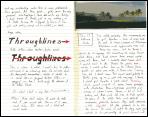
In order to secure the copyright permissions, it turns out that one needs not only the author and title and ISBN number of a particular book, but the actual page number on which the poem appears. In many cases, it wasn't that hard. Amazon's makes most of the relevant information available online; their "Look Inside this Book" feature is invaluable since they almost always include the table of contents, which allow me to get the necessary page numbers without leaving my desk. Some books, however, are not (yet?) so indexed, which is why I found myself driving, one evening last week, to the brick-and-mortar Borders at Ward Center in Honolulu, on the off chance of locating the page numbers of the two remaining books on my list: Wendell Berry's Given and Jack Gilbert's Refusing Heaven. Against all odds and expectations, there they both were on the shelves, one last copy of each book, with the relevant poems both appearing on page 18. In a small gesture of propitiation to the gods of serendipity, I wound up buying the Gilbert book, as well as a new collection of poems by Carl Dennis called Unknown Friends. Although it would take a mighty sharp eye to make the discrimination, those are the two books whose pages you see turned down in the picture at the head of this post.

Of the two poets, Gilbert is the darker and more idiosyncratic. His poems are often meditations on ambiguity and discontinuity, on the way pleasure shades into sorrow, love into loss, belief into betrayal. My favorite of the poems in the book, after "Failing and Flying," a poem which was nominated by two of our teachers, was this one:

Homage to Wang Wei

An unfamiliar woman sleeps on the other side
of the bed. Her faint breathing is like a secret
alive inside her. They had known each other
three days in California four years ago. She was
engaged and got married afterwards. Now the winter
is taking down the last of the Massachusetts leaves.
The two o'clock Boston & Maine goes by,
calling out of the night like trombones rejoicing,
leaving him in the silence after. She cried yesterday
when they walked in the woods, but she didn't want
to talk about it. Her suffering will be explained,
but she will be unknown nevertheless. Whatever happens,
he will not find her, despite the tumult and trespass
they might achieve in the wilderness of their bodies
and the voices of the heart clamoring, they will still
be a mystery each to the other, and to themselves.

The poem is a pretty good example of Gilbert's manner and preoccupations. It is direct and accessible, but it is also artful: there are nice little surprises embedded in the way particular nuances are conveyed: her breath "like a secret alive inside her," the "tumult and trespass they might achieve in the wilderness of their bodies." It's also, like many of the poems in the book, alert to and explicitly concerned with the ways in which we fail ourselves and each other.

Carl Dennis shares some of the same preoccupations, but his style is much different. His poems are less obviously "poetic." He has a very smoothly modulated conversational style that often relies on anecdotes that are arresting and often gently, ruefully humorous:

The False and the True

The story she told at their first meeting,
Last spring in the health food store,
That she'd just returned from a year at a school
For Buddhist nuns outside Benares,
Turned out to be falst, the jade barette
That loosely gathered her waist-length hair
Made in Detroit. But his feelings for her
Revealed the partial truth behind them:
That she'd dreamed of going, and would have,
If she'd been able to save enough for plane fare
And didn't have a daughter in high school
Here in Erie County and a job at the hospital.

As for his tacit hint that his quiet demeanor
Was a sign of a peace-loving character, that was true,
She later discovered, though his conversion to peace
Happened more recently than he'd suggested.
Just a month before, in fact, when his doctor warned him
His ulcer was worse, and no wonder,
What with his years of quarreling with his colleagues
In County Health. But who can blame him,
She wants to know, for his outrage
At their lax enforcement of pollution laws?

It's true she still hasn't told him about her brush
With cancer last fall. True he's been silent
About the operation scheduled for spring
To repair a heart valve. But if their silence
Has cast a shadow between them,
Each knows the other knows that the odds are slim
They'll have more than a score of years together.
Meanwhile, here they are,
With time enough to list the efforts they'll make,
If given a chance, for the other's sake,
Many of them ambitious and meant sincerely.

There's no individual line here which would call attention to itself as poetry. But theres a precision to the delivery and pacing of the whole poem that I find very convincing. There's no waste or fluff here. The story is told is compact and funny and true to life.

Once I get done with the dogears, I can usually tell how much I liked a particular book by seeing how fat it is at the top. I liked both of these collections a lot, for different reasons.


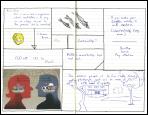
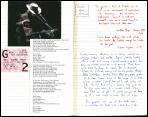

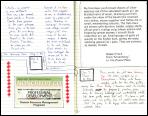
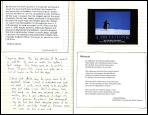



Friday, May 2, 2008

Cognitive Surplus


Will Richardson posts this (sixteen minute) video today Of Clay Shirky, author of Here Comes Everybody, making an innovative and encouraging argument about what he is calling "cognitive surplus":


Monday, April 28, 2008

Tolstoy IV: The Hunt


I’ve written previously about Tolstoy’s attentiveness and sympathy with regard not just to his characters but to animals as well. There’s a remarkable passage in the second half of the book where he actually works his way directly into the mind of an animal. Levin has been out hunting snipe with two visitors, and in his self-consciousness has had a terrible day. He misses his first shots and that sets the pattern:

It always happened with Levin that when his first shots were unsuccessful, he would become angry, vexed, and shoot badly all day. That was happening now. There were a great many snipe. Snipe kept flying up from under the dog, from under the hunters’ feet, and Levin might have recovered; but the more shots he fired, the more he disgraced himself in front of Veslovsky, who merrily banged away, in and out of range, hit nothing, and was not the least embarrassed by it. Levin rushed, could not control himself, became more and more feverish and finally reached the point of shooting almost without hope of hitting anything. Even [his dog] Laska seemed to understand it. She began searching more lazily and glanced back at the hunters as if in perplexity or reproach. (583)


At the end of the day’s hunting, Levin returns with his friends, one of whom, his brother-in-law Oblonsky, has bagged 14 birds to Levin’s 5, which fills Levin with frustration and regret; there has been a friendly rivalry between them that has been threatening to turn nasty. The next morning gets up early and goes out to the marsh on his own, with Laska. There follows an extended passage in which Tolstoy begins by describing the details of the hunt objectively in the third person, but then works his way ever-so-deliberately down into and inside of the consciousness of Laska herself:

Not feeling her legs under her, moving at a tense gallop so that she could stop at each leap if necessary, Laska ran to the right, away from the morning breeze blowing from the east, and then turned upwind. Breathing in the air with flared nostrils, she sensed at once that there were not only tracks but that they themselves were there, but precisely where she was unable to tell. She had already begun a circle to find the place when her master’s voice suddenly distracted her. ‘Here, Laska!” he said, pointing in a different direction. She paused briefly, as if to ask if it would not be better to finish what she had begun. But he repeated the order in an angry voice, pointing to a water-flooded hummocky spot where there could not be anything. She obeyed him, pretending to search in order to give him pleasure, ran all over the hummocks and then back to the former place, and immediately sensed them again. Now, when he was not hindering her, she knew what to do, and, not looking where she put her feet, stumbling in vexation over high hummocks and getting into the water, but managing with her strong, supple legs, she began the circle that would make everything clear to her. Their smell struck her more and more strongly, more and more distinctly, and suddenly it became perfectly clear to her that one of them was there, behind that hummock, five steps away from her. On her short legs she could see nothing ahead of her, but she knew from the smell that it was sitting no more than five steps away. Her tense tail was extended and only its very tip twitched. Her mouth was slightly open, her ears pricked up a little. One ear had got folded back as she ran, and she was breathing heavily but cautiously, and still more cautiously she turned more with her eyes than her head to look at her master. He, with his usual face but with his ever terrible eyes, was coming, stumbling over the hummocks, and extremely slowly as it seemed to her. (593)


Soon, the interaction between them has devolved into a sort of comic dialogue:

‘Flush it, flush it,’ cried Levin, nudging Laska from behind.

‘But I can’t flush anything,’ thought Laska. ‘Where will I flush it from? I can sense them from here, but if I move forward, I won’t be able to tell where they are or what they are.’ Yet here he was nudging her with his knee and saying in an excited whisper, ‘Flush it, Lasochka, flush it!’

‘Well, if that’s what he wants, I’ll do it, but I can’t answer for myself any more,” she thought and tore forward at full speed between the hummocks. She no longer smelled anything, but only saw and heard, without understanding anything.

Ten steps from the former place, with a thick creech and the swelling noise of wings peculiar to its kind, a single great snipe flew up. And following a shot it plopped down heavily, its white breast against the wet bog. (594)


The episode ends with the Levin, his confidence and equanimity newly restored, walking homeward in a world transformed in his consciousness:

By the time Levin reloaded his gun and started off again, the sun, though still invisible behind the clouds, was already up. The crescent moon, having lost all its brilliance, showed white like a cloud in the sky; there was no longer a single star to be seen. The marshy patches, silvery with dew earlier, now became golden. The rustiness turned to amber. The blue of the grass changed to yellowish green. Little marsh birds pottered by the brook, in bushes glistening with dew and casting long shadows. A hawk woke up and sat on a haystack, turning its head from side to side, looking with displeasure at the marsh. Jackdaws flew into the fields, and a barefoot boy was already driving the horses towards an old man, who had got up from under his caftan and was scratching himself. Smoke from the shooting, like milk, spread white over the green grass. (594-5)


Again, what I find myself admiring in this episode, and in this last passage in particular, is the craft: the extraordinary precision with which Tolstoy renders the physical sequence of events of the hunt, even what’s going on in the mind of the dog. Then at the end he makes the description of the landscape the perfect mirror of Levin’s endorphin-drenched consciousness (“The marshy patches, silvery with dew earlier, now became golden. The rustiness turned to amber.”) culminating with an image harmonizing even the shotgun smoke with the morning landscape: “Smoke from the shooting, like milk, spread white over the green grass.”

Great stuff.

Sunday, April 27, 2008

Tsunami


As a sort of companion piece to the Doug Fine video I posted yesterday, here's the lead paragraph to Wendell Berry's characteristically eloquent essay "Faustian Economics," featured in the May 2008 Harper's:


The general reaction to the apparent end of the era of cheap fossil fuel, as to other readily foreseeable curtailments, has been to delay any sort of reckoning. The strategies of delay, so far, have been a sort of willed oblivion, or visions of large profits to the manufacturers of such "biofuels" as ethanol from corn or switchgrass, or the familiar unscientific faith that "science will find an answer." The dominant response, in short, is a dogged belief that what we call the American Way of Life will prove somehow indestructible. We will keep on consuming, spending, wasting, and driving, as before, at any cost to anything and everybody but ourselves.


The buzzword in the world press over the last several weeks has been the "silent tsunami." In the May 2 issue of The Week magazine there is an article on the global food crisis that points out that the prices of corn, wheat, and rice are at record levels, and that one of the contributing factors is the the increasing demand for biofuels: "The U.S. produces 40 percent of the global corn crop, but about one in five ears is now used to make ethanol. Record oil prices have also boosted food costs, since so much food is now shipped long distances, via trucks, ships, and airplanes." That, combined with exponential growth in demand for food and consumer goods in China in India, is leading us into a world in which "food will become an increasingly precious commodity, with food riots, massive starvation, and even wars spreading across the globe."


As a resident of Hawaii, I'm more than a little concerned about where we are going with all of this. Something like 90% of our food from elsewhere. More than 90% of our electrical energy is generated from fossil fuels. The largest part of our economy is based on tourism. And the only way to get to or from these islands is by boat or by plane. And yet there is next to no serious dialogue in the state — in the papers or in the legislature or anywhere else that I can see — about limiting growth, or about adjusting expectations or even about doing something as simple as making bike travel — surely a no-brainer on an island the size of Oahu — safer and easier. None of our leadership, least of all our governor, seems to be taking an interest. And meanwhile, back on the mainland, our would-be presidential candidates are being asked about why they aren't wearing American flag pins. Hello? Hello?

Saturday, April 26, 2008

Farewell, My Subaru


Wes Fryer has a post today that features the following YouTube video about Doug Fine and his attempt to live off the grid. Pretty informative and entertaining. Jason, you're gonna like this.


Friday, April 25, 2008

Tolstoy III: Invisible Larks


Spring was a long time unfolding. During the last weeks of Lent the weather was clear and frosty. In the daytime it thawed in the sun, but at night it went down to seven below; there was such a crust that carts could go over it where there was no road. There was still snow at Easter. Then suddenly, on Easter Monday, a warm wind began to blow, dark clouds gathered, and for three days and three nights warm, heavy rain poured down. On Thursday the wind dropped, and a thick grey mist gathered, as if concealing the mysteries of the changes taking place in nature. Under the mists the water flowed, ice blocks cracked and moved off, the muddy, foaming streams ran quicker, and on the eve of Krasnaya Gorka the mist scattered, the dark clouds broke up into fleecy white ones, the sky cleared, and real spring unfolded. In the morning the bright sun rose and quickly ate up the thin ice covering the water, and the warm air was all atremble, filled with the vapors of the reviving earth. The old grass and the sprouting needles of new grass greened, the buds on the guelder-rose, the buds and the sticky, spirituous birches swelled, and on the willow, all sprinkled with golden catkins, the flitting, newly-hatched bee buzzed. Invisible larks poured trills over the velvety green fields and the ice-covered stubble, the peewit wept over the hollows and marshes still filled with brown water; high up the cranes and geese flew with their spring honking. Cattle, patchy, moulted in all but a few places, lowed in the meadows, bow-legged lambs played around their bleating, shedding mothers, fleet-footed children ran over the drying paths covered with the prints of bare feet, the merry voices of women with their linen chattered by the pond, and from the yards came the knock of the peasants’ axes, repairing ploughs and harrows. The real spring had come. (153)


This passage occurs fairly early in Anna Karenina. Levin, a bachelor who feels himself to be something of a country bumpkin when in the presence of the Russian nobility in Moscow, has recently returned to his country estate after being rejected by the woman he had hoped to make his bride. He is trying to hold himself together, trying to be philosophical about the fact that his dreams have been smashed. More or less by way of distracting himself from his sorrow, he turns his attention to the management of his estate and to the writing of a book on farming.

The placement of this passage at this moment in the story allows the seasonal description, which works perfectly well at the literal level—giving us a very rich, imagistic rendition of time and place, the external world in which Levin operates—to suggest obliquely something of the turmoil going on within Levin as well. The change of the season suggests that that which has been frozen within him, his ability to find joy in his surroundings, is at last thawing, as he turns his attention outward.

What I note here from a technical point of view is first of all the careful attention that Tolstoy pays as a writer to the physical world around him, and his patience in the construction of each sentence individually. Look at the sequences within the last three sentences especially, after spring has arrived in earnest. First he describes the grass, the buds, the birches, the bees. Then the birds: larks, peewits, cranes, geese. Then the living creatures: the cattle, the lambs, the children, the women, the men. The description is precise without being obsessive, and carefully sequenced without feeling forced. And, characteristically, Tolstoy is able to construct the passage in such a way as to get double duty out of the description, as I've hypothesized. And yet the passage reads smoothly, and Tolstoy’s artfulness is anything but ostentatious.

Side Note: Translator Richard Pevear, in his introduction to the book, argues that “Levin is [Tolstoy’s] most complete self-portrait. He has the same position as his creator, the same “wild” nature, the same ideas and opinions, the same passion for hunting, the same almost physical love of the Russian peasant… Levin’s estate reproduces Tolstoy’s Yasnaya Polyana, and his [eventual] marriage to Kitty duplicates Tolstoy’s marriage to Sophia Andreevna in the minutest details.”

Tuesday, April 15, 2008

Tolstoy II: Horsiness


Here's a thought experiment. Or if you prefer, a writing exercise. You might do this as sort of guided meditation, or actually sit down and try to write your way through it.

Picture an animal, one you have seen often enough and know well enough to be able to call it to mind. Think your way through how you would go about describing it. What would you say to someone, what would you write down, to bring this animal to life in the mind of someone else? If you wish, take a few minutes now to do a freewrite. Or have a mental conversation with yourself about this animal.

Finished? Very good. Now read this. It's a passage from Anna Karenina where Vronsky, about to be take part in a horserace, goes to the stable to check on his mount:

He opened the door, and Vronsky went into the stall, faintly lit by one little window. In the stall stood a dark bay horse, shifting her feet on the fresh straw. Looking around the half-lit stall, Vronsky again took in at a glance all the qualities of his beloved horse. Frou-frou was of average height and not irrrproachable. She was narrow-boned all over; though her breast-bone protruded sharply, her chest was narrow. Her rump drooped slightly, and her front legs, and more especially her hind legs, were noticably bowed inwards. The muscles of her hind and front legs were not particularly big; on the other hand, the horse was of unusually wide girth, which was especially striking now, with her trained shape and lean belly. Her leg bones below the knee seemed no thicker than a finger, but were unusually wide seen from the side. Except for her ribs, she looked was all squeezed from the sides and drawn out in depth. But she possessed in the highest degree a quality that made one forget all shortcomings; this quality was blood, that blood which tells, as the English say. Her muscles, standing out sharply under the web of veins stretched through the thin, mobile and satin-smooth skin, seemed strong as bones. Her lean head, with prominent, shining, merry eyes, widened at the nose into flared nostrils with bloodshot inner membranes. In her whole figure and especially in her head there was a distinctly energetic and at the same time tender expression. She was one of those animals who, it seems, do not talk only because the mechanism of their mouths does not permit it. (181-2)

Now that you've read this passage, go back and make note of the places where Tolstoy does something as a writer that surprises you or interests you, something that you yourself did not think or would not have thought to have done in this way. Chances are that you'll find quite a few instances, and that all of the ones you find will be instructive.

One move I notice, for example, is when Tolstoy actually pushes down past a description of the major bodily parts to a description of the horse's lower legs: "Her leg bones below the knee seemed no thicker than a finger, but were unusually wide seen from the side." Embedded in that description is an implied shift in observational perspective: looking not just at the lower legs—which would be perhaps a more specific focus than most of us might have attempted—but looking at the legs first from the front, and then from the side. This is a writer who is paying very close attention, to the extent that he seems to be conducting a sort of almost three-dimensional physical examination. He not only notes the Frou-frou's flared nostrils, he goes so far as to look up the animal's nose and remark on its "bloodshot inner membranes."

Then there's the elegant and rather surprising move that concludes the paragraph. It's a variation on a stock descriptive device, the move we often find in narrative that begins "he was the sort of person who..." Here it comes out as "She was one of those animals who, it seems, do not talk only because the mechanism of their mouths does not permit it." This sentence is an amplification by categorical example of the move, begun in the previous sentence, away from physical description and toward what might be called spirit or intellectual character: this is a horse smart enough to speak if only she had the physical ability to do so.

I could go on in this vein for some time. In almost every sentence, there is an artfulness on display that arises from the quality of the attention that Tolstoy is paying to this horse, this wholly imaginary horse that he is in essence calling into existence by virtue of the words he is writing on the page. I say Tolstoy, rather than Vronsky, because in fact all of what Tolstoy is at such pains to present to us is absorbed instantaneously, holistically, by Vronsky "at a glance." He already knows this horse, her strong and her weak points. Vronsky is deeply into a psychic relationship with this horse, and the depth of his knowledge implies that he loves her and cares for her. And all of the close attention, leading to a sort of sympathetic attachment, that Tolstoy encourages us to pay to this very particular, very beautful horse, is by way of setting up our reaction when, less than twenty pages later, Vronsky, in the race, overreaches himself and drives the horse to her death. At which point we begin to come to some conclusions about the sort of person Vronsky is.

The point being that nothing here is wasted. This careful, measured, almost obsessive description is not an indulgence in art for art's sake. It is integral to everything we are learning about Vronsky, and it is relevant to everything else that happens in the book.

Monday, April 14, 2008

Tolstoy I: Aspiration and Inspiration


Since there is so much that is remarkable in Tolstoy's Anna Karenina, and since I do not have the luxury of a few years to put together anything like a comprehensive account of either the book itself or its impact on me as a reader, I've decided to attempt something more modest and within the range of what I might able to be accomplish, which is to say, to write a few posts which might consider, one or two at a time, a few passages that have jumped out at me for one reason or another. The passage below, for example, occurs a little more than midway through the book, at a point when Vronsky, formerly in the military and now living more or less in exile with Anna in Italy, has decided to try his hand as a painter. Here is Tolstoy's very precise description of Vronsky's strengths and weaknesses as an artist:

He had an ability to understand art and imitate it faithfully, tastefully, and thought he had precisely what was needed for an artist. After some hesitation about what kind of painting he would choose—religious, historical, genre, or realistic—he started to paint. He understood all kinds and could be inspired by one or another; but he did not imagine that one could be utterly ignorant of all the kinds of painting and be inspired directly by what was in one's soul, unconcerned whether what one painted belonged to any particular kind. Since he did not know that, and was inspired not directly by life but indirectly by life already embodied in art, he became inspired very quickly and easily, and arrived as quickly and easily at making what he painted look very much like the kind of art he wanted to imitate.

I often find myself, when I'm reading Tolstoy, in a mental zone that is somewhere between absorption and delight. A lot of what he writes is pleasing in multiple ways simultaneously. This passage, for example, is a gentle, good-humored (Tolstoy is unfailingly good-humored) satirical portrait, focusing in on one very specific aspect of Vronsky's character: his shallowness. His problem is not just that he's derivative; his problem is that can "not imagine that one could be... inspired directly by what was in one's soul." He's not only derivative, but it's also never occurred to him that he might in fact be so. In short, he doesn't know what he doesn't know.

Then there's pleasure to be taken in the architecture of the sentences themselves. The last sentence is set up as a kind of one-two punch, and the (second) punch line succeeded in making me laugh out loud the first time I read it, and again each time I read it. It's very artfully done: rhythmical and fluid and emphatic and, well, funny.

What gives the passage still more resonance, of course, is that Vronsky's dilemma is the dilemma all of who aspire to even the merest aesthetic accomplishment: anyone who has tried to draw, or paint, or play music, or write, or, God help us, to teach others to do any of these things, will recognize in themselves, to a greater or lesser degree, exactly the limitation that Tolstoy is revealing in Vronsky. As anyone who has tried seriously can testify, it can be just viciously hard to write in a way which is recognizably "inspired directly by what is in one's soul." But that's the Holy Grail for artists, writers, and visionaries of every stripe. Hemingway, for one, made it an article of faith to start by trying to write "one true sentence." It's something I wrestle with as a writer, and something I ask my students to wrestle with as writers. It's hard facing a blank page with an empty mind. How do you find your own true voice? How do you escape the anxiety of influence? How do you find your way to be able to write that which only you could have written? It has to start with what you see, and what you see has, as Tolstoy suggests, a lot to do with how you go about looking, what kinds of constraints you have on your ability to see freshly and clearly.

Today I was meeting with a junior school supervisor who was showing us samples of work done by third graders, and one of the things the teachers are trying to figure out in grade three is how to assess "creativity." If we want grade three students to be knowledge creators and not just knowledge repeaters or knowledge replicators, we have to help them learn first how to see directly, lest they ultimately become, like Vronsky, and like so many of the high school students who show up in my classroom, second-hand thinkers who tend, at least initially, to be quite satisfied with replicating what others have done before them. What makes Tolstoy a genius as a writer is that he is writing what only he could have written in a way that only he could have written it. That's what most of the rest of us can only aspire to.

Saturday, April 12, 2008

A Question of Balance


I’ve been away from Throughlines so long now that I feel like a stranger in my own house. I’ve been struggling to keep my balance in the midst of a multitude of competing demands on my time: doing upwards of 25 candidate interviews for what has turned out to be three positions in my department, handling the flow of (nearly 200) submissions for the spring issue of our literary magazine and supervising the staff meetings, keeping up with my classes and having the quarter grades come due, taking nominations from department members for the English awards that are presented each spring, doing scheduling (spreading 30 teachers into 20+ English courses, each with multiple sections each semester, then filling out the multiple overlapping redundant forms that make it possible for all those courses to be successfully scheduled), taking three days to fly to San Francisco to meet with a hardware vendor and a software vendor and visit a tech-enhanced Silicon Valley high school, attending the usual schedule of eight or ten formal meetings a week, keeping up with email and posts pouring into Google Reader, preparing schedule and materials for a half-day tech retreat for the soph English teachers and a two-day off-campus retreat for 20 teachers K-12, meeting with individual students who come to see me in conference (easily the best part of my day), trying to get some sort of exercise each day and read a bit here and there.

At one point in my life I entertained the quaint notion that the longer I stayed in teaching the easier it would become, that with experience I’d become more fluid and efficient. As if.

I’m not complaining. I like the work I do, and I find it challenging and interesting and satisfying. But I definitely feel more squeezed for time right now than I ever have before. The new stuff that keeps coming at me is mostly stuff I’ve signed up for because I wanted to, because I was interested. I’m trying to support and want to contribute to ongoing on-campus dialogues about such things as sustainability and service learning and blended learning and tech-enhanced education and social entrepreneurship and authentic assessment and support for students with learning differences. These are all worthy discussions. I've got stacks of readings I have yet to get to with regard to all of them. All I need is time.

I’ve also got lots of ideas for things that I might like to write about for Throughlines. The list above would barely serve as an outline. But getting into any one of them would require time to write and rewrite and annotate. Or, for example, I’ve been reading Anna Karenina, and I’d love to write my way through some of my thoughts about that book, but I feel like I really should finish it before I start trying to sort it out, and I’ve gotten stalled out because of all the stuff in the list above. I could be reading it right now, but, well, I’m writing this instead, on the theory that if I post something tonight maybe I’ll be able to follow up tomorrow and get a little string going. And even if I were to say right now, okay, let’s talk about Tolstoy, where would I even begin? There are about a thousand points of entry.

So, not for the first time, I’m trying to find some balance in my life, trying to figure out a way to be able to do what I want to do with my time, which would include some regular schedule of reading and writing, and what I need to do. Technology has given me many more choices of what to read and what to write, but it has made it harder for me to separate them out. It’s the horizontality issue again, the postmodernist dilemma: breadth (doing 100 things very shallowly) vs depth (doing two or three things with focus and intensity). (It is probably not an accident that I was writing a very similar post at pretty much the same time last year.)

It’s eight o’clock at night in Honolulu. I had planned to go to the gym tonight. If I’m gonna make it, I’ve gotta go. When I get back, Anna Karenina will be waiting for me. Assuming I can stay awake long enough when I get back to make some progress. Wish me luck.

Monday, March 31, 2008

Meme: Passion Quilt


Mr. B-G tagged me about two weeks ago for the passion quilt meme, but I was offline for a while and am now just getting around to it.

THE RULES:

Post a picture or create your own image that captures what YOU are most passionate for students to learn about
Give your picture a short title
Title your blog post “Meme: Passion Quilt”
Link back to this blog entry
Include links to 5 people in your professional learning network

So here's mine:

Literature Circles


There is a primary level of engagement that comes with reading any quality text. But that level of engagement comes with one primary built-in limitation: it's solitary. Of course I love to read, and I hope that one day my students will derive as much enjoyment and enrichment from reading as I have been able to do during my lifetime. But probably most of the reading I do is isolating: it puts my in a world by myself, so much so that I am often oblivious to what is going on around me, a fact that my family sometimes has found at times found quaintly amusing and at other times downright annoying.

But there are other satisfactions to reading as well, and one of them is to be able to share your thoughts about a common text with other readers. That's the beauty of a classroom. The experience of shared reading makes possible another, second level of engagement: participation in a community of discourse. Of course I wish for my students to be readers. But beyond that, I wish for them to experience and learn to value the time that we spend together, helping one another to ask better questions, come up with better answers, go broad and deep, wending our way to the heart of the matter.

(I took this picture of my students engaged in exactly this process during the summer 2007 session of sophomore English. I hope they remember those hours with as much aloha as I do.)


Doing my part to keep the meme going, I'm going to tag

Chris Watson
Bud Hunt
Doug Belshaw
Louann Reid
Chris Lehmann